
Redesigning the
Lunchsox Website
Research, Strategy, UX Design, Prototyping
Problem: Philanthropic individuals don’t have many options to purchase locally-sourced gifts that also support causes they believe in.
Goal: Design a website for Lunchsox that allows users to easily order hunger-fighting products.
My Role: UX designer designing the website from conception to delivery. I conducted interviews and usability studies, created paper and digital wireframes, designed low and high-fidelity prototypes, and accounted for accessibility in the designs.
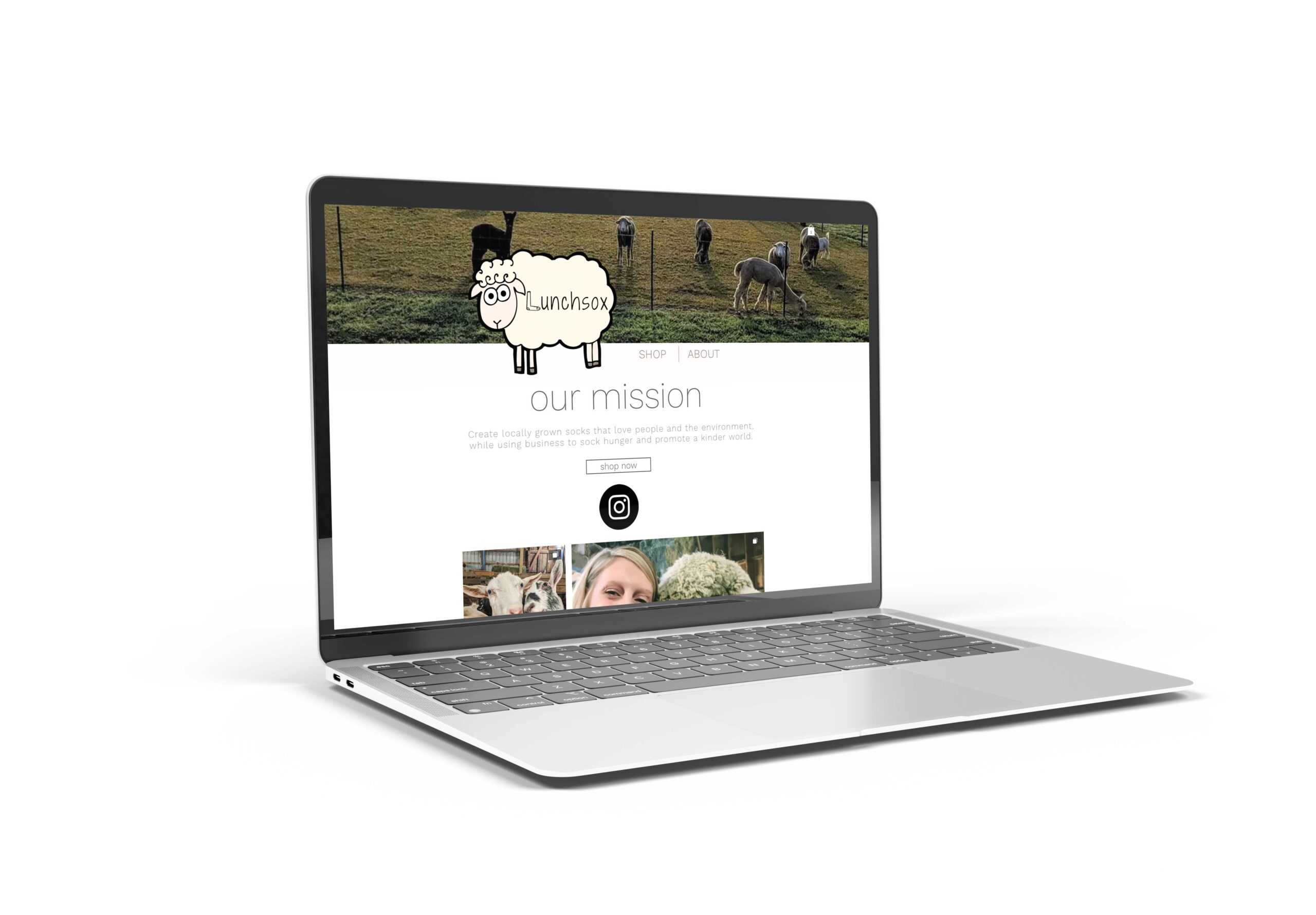
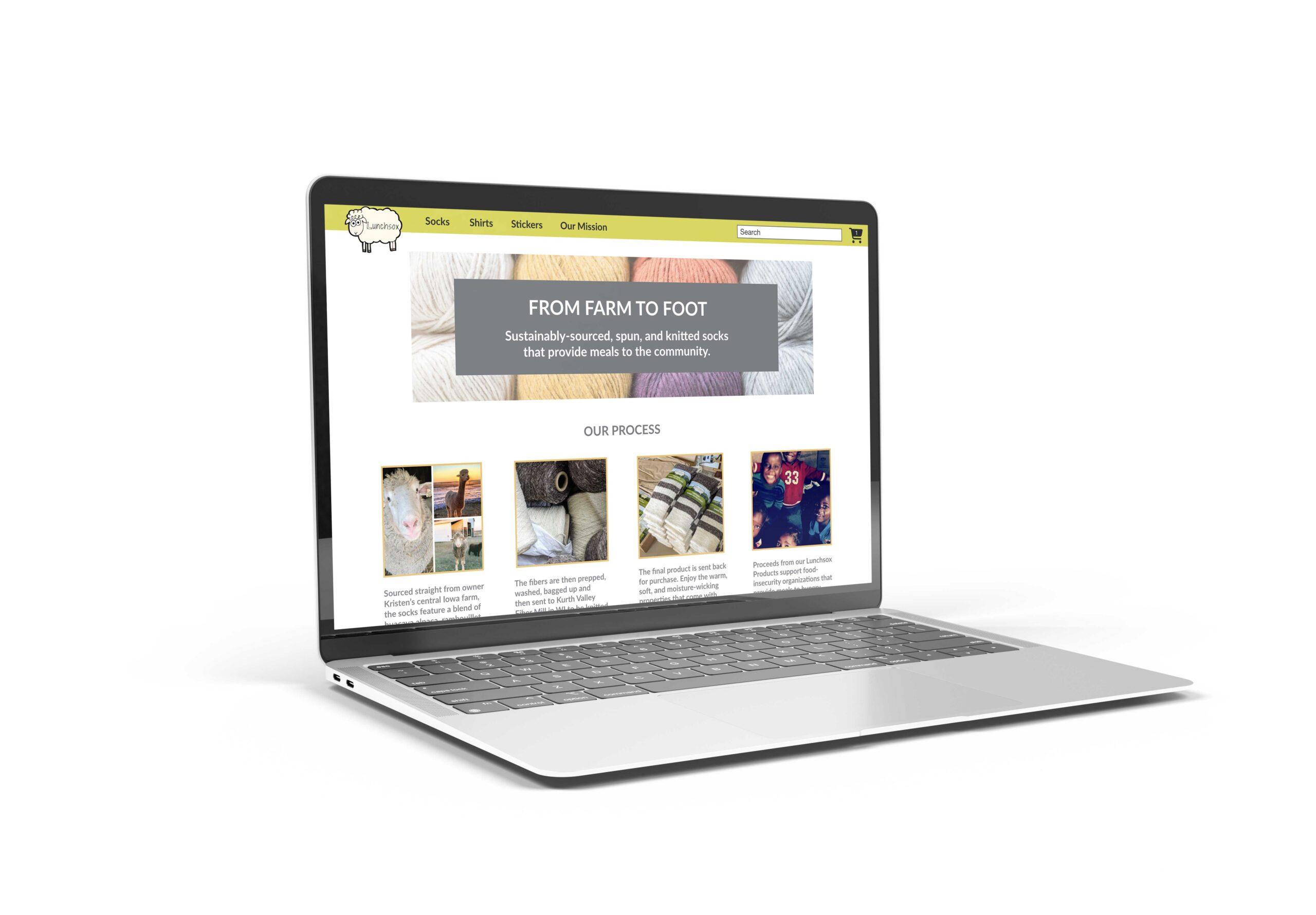
Before & After
Empathize: I conducted interviews and created empathy maps to understand the users I designed for and their needs. A primary user group identified through research was college graduates who want to buy local products that support causes. Some challenges for this target audience include: cost as a limiting factor keeping users from purchasing items that supported causes. Other user problems included obligations or interests that make it difficult to find locally-sourced products online.
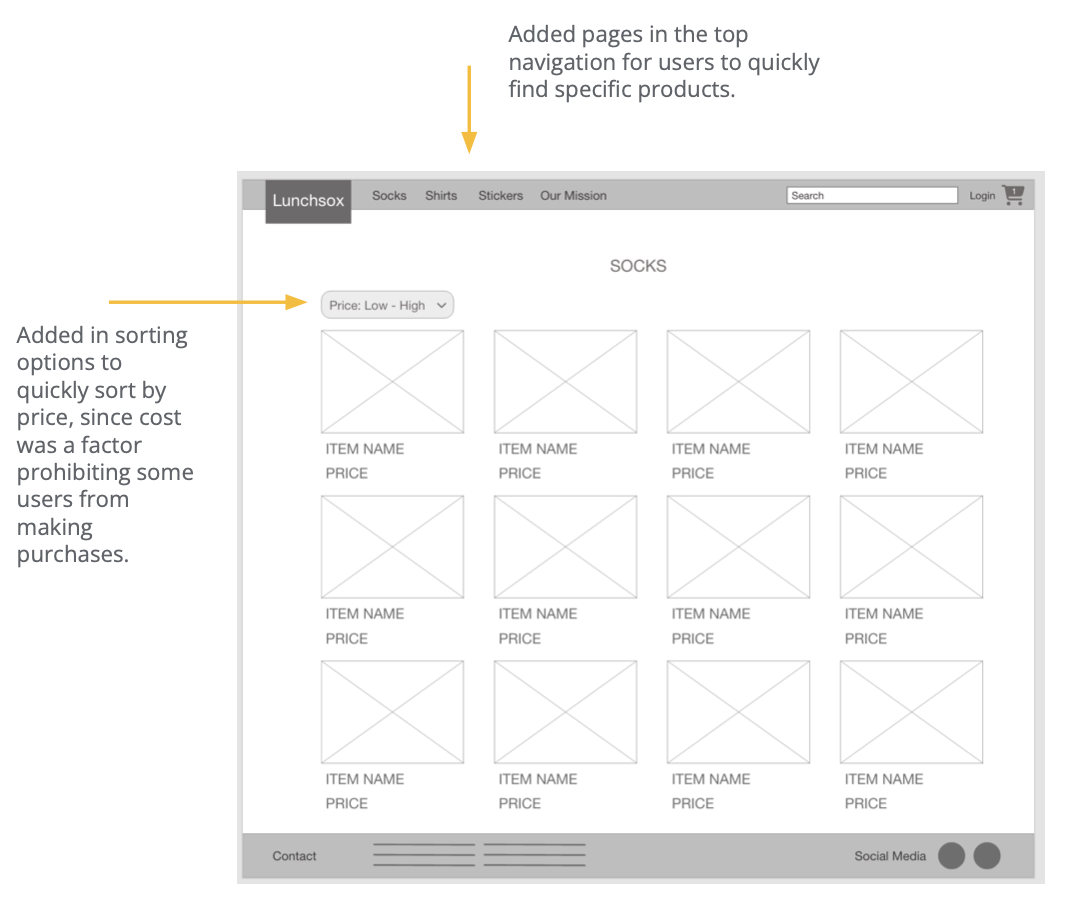
Define: Mapping one user journey revealed how helpful it would be for users to easily filter and search for Lunchsox products with an improved navigation design.
Ideate: Taking the time to draft iterations of each screen of the app on paper ensured that the elements that made it to digital wireframes would be well-suited to address user pain points.
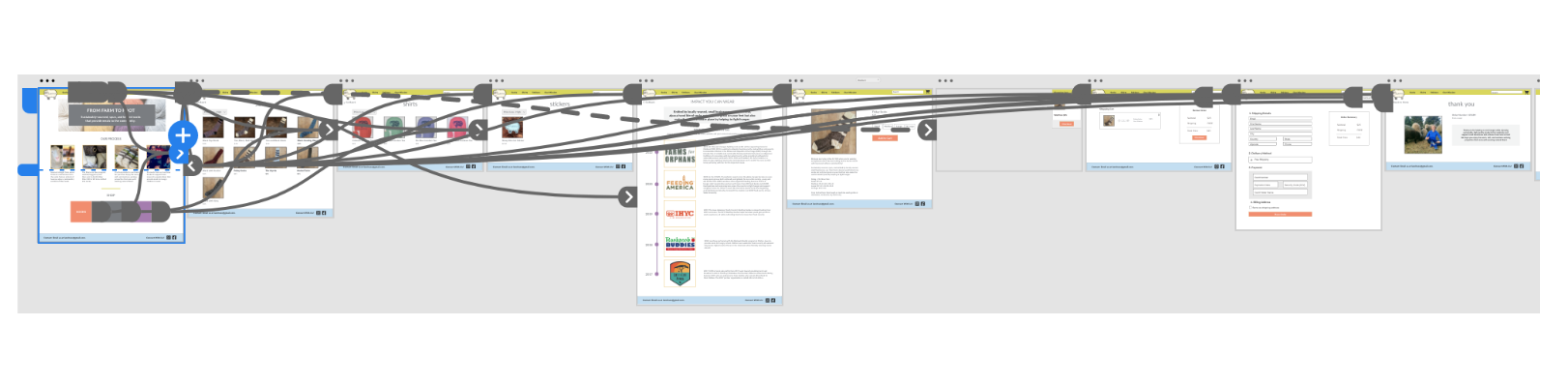
Prototype: Using the completed set of digital wireframes in Adobe XD, I created a low-fidelity prototype. The primary user flow I connected was completing a purchase, so the prototype could be used in a usability study.
Test: After two separate usability studies, the final high-fidelity prototype presented cleaner user flows for the checkout process.
What I Learned: While designing the Lunchsox website, I learned that small changes in the design of single elements can make a big impact on the users’ overall experience. I was able to create new components, like an input stepper, that I can now add to my toolbox of design experiences. Possible next steps would be to conduct another round of usability studies to validate whether the pain points users experienced have been effectively addressed.
© Valyn Bodensteiner 2025